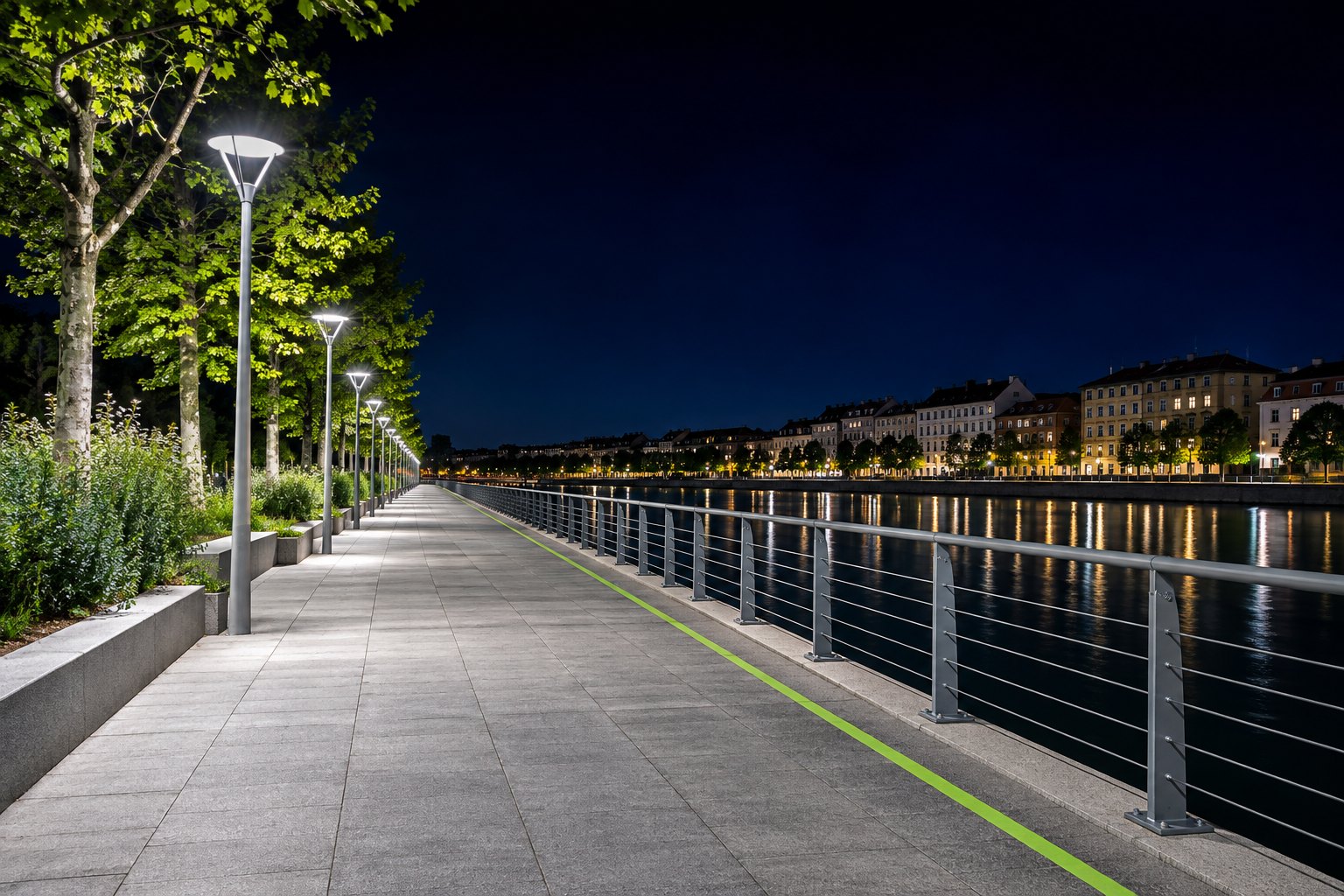
Start with what you can check
Think about the whole outing: getting to the start, the surface you will use, crossings, lighting and the way home. A route you know in daylight may present different practical problems after dark. REI’s night-running guidance discusses route familiarity, light and preparation. Use that as context for your own checks, not proof that a particular path is suitable tonight. Local access, conditions and your comfort with the setting still matter.
Choose a route you can change
A simple loop or a route with familiar return options can be easier to describe than a complicated collection of turns. Check opening hours where parks, tracks or facilities have gates. Ask a group organiser about the actual meeting and finish points rather than assuming they are identical. Keep an alternative for a closed path, poor lighting or a change of plan. An alternative can be a different activity or staying in; it need not preserve a distance target.
Keep the plan useful to another person
If you arrange a check-in, agree what information to share, when it is expected and what happens if the plan changes. Our run card calculates clock times but does not send a message, monitor progress or alert anybody. It also has no route map or live conditions. Use an appropriate private communication route for actual arrangements rather than publishing a repeated personal schedule. A downloaded card is simply your own working note.
Questions worth settling before the door
Where does the planned activity start and finish? Which parts of the route are lit and accessible at the actual time? What happens if a crossing, gate or path cannot be used? Is the return journey straightforward? Which person or organiser needs to know about a change? These questions make the plan concrete without pretending that a general article can clear a route for use. Recheck the actual situation before leaving and change the plan when needed.