Separate the session from the shopping list
Write down what the planned outing requires before looking at products. You may already have ordinary items that meet the organiser’s instructions and your practical needs. Ask what a venue supplies and what must be brought personally. A list for a short urban group session is not automatically a list for a remote trail outing. We do not publish a universal bag or treat the amount of equipment owned as evidence of progress.
Check fit through ordinary use
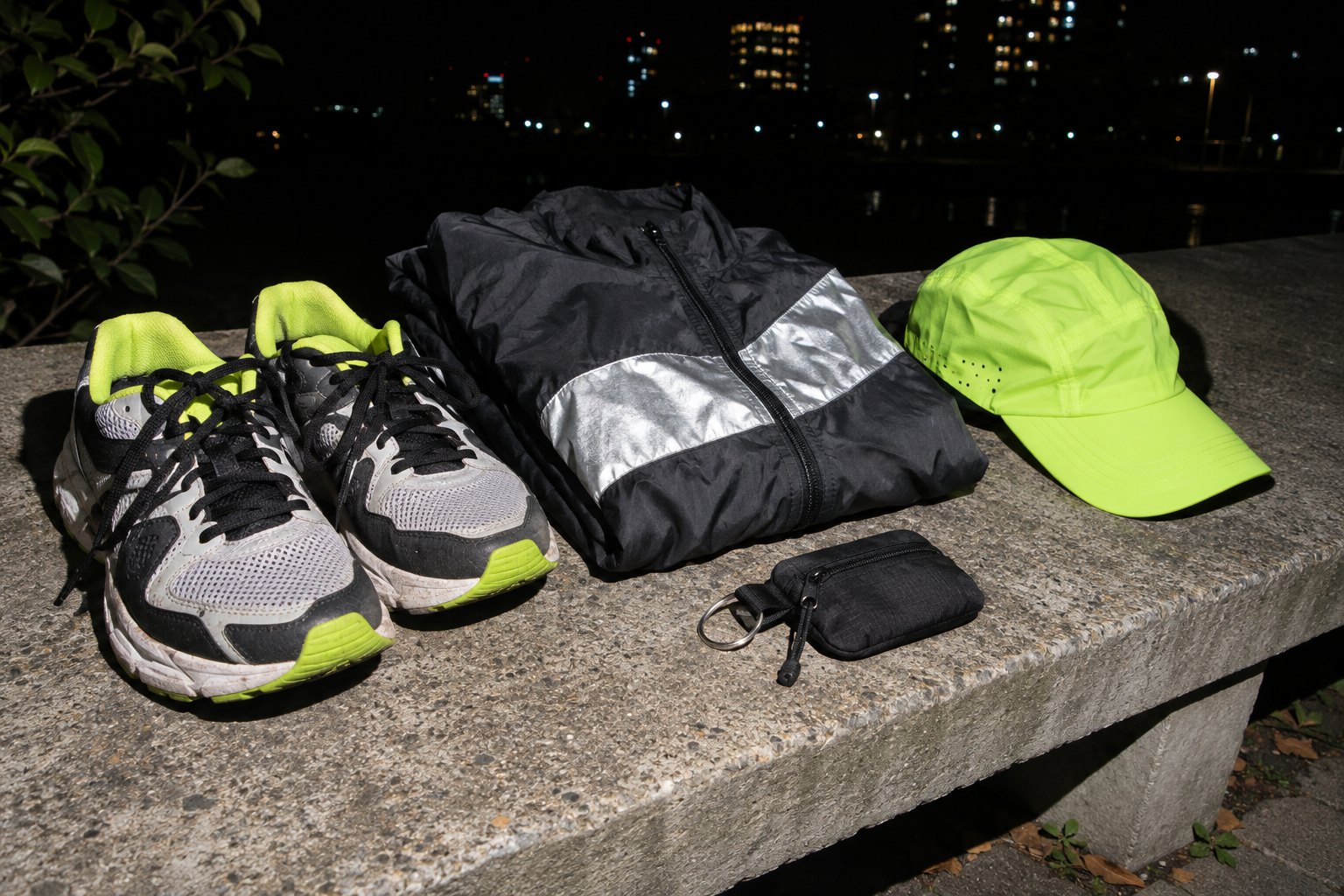
Before relying on an item for an outing, establish how it is fastened, carried and operated. A key pouch should keep its contents secure without needing repeated adjustment; a light should attach as the manufacturer describes; clothing should work with the rest of what you are wearing. Resolve uncertainty through the relevant provider or organiser. An editorial photograph illustrates a subject but cannot verify size, comfort, product performance or suitability for an individual.
Remember the minutes around the activity
Preparation and return arrangements take time as well. Think about the items you need before leaving and after returning, including any booked venue or transport arrangements. Our run card separates preparation time, time out and a return buffer so these decisions are visible. The numbers are your assumptions; they are not a workout plan, transport timetable or live estimate. Do not use the card to replace checks of actual access and conditions.
Review what actually helped
After an outing, keep a small practical observation: an item that was awkward to operate, a missing instruction or something you carried without using. Use that observation to ask a better question before a purchase. The journal contains no affiliate sales links and does not rank brands. Choosing fewer well-understood items may be more useful than adding another category to a generic list. Keep the session and the actual setting in view.